


GCL 2026: A Milestone Representing 20 Years of Leadership, Innovation, Connection, and Impact
On March 25, 2026, the twentieth cohort of the Global Competitiveness Leadership (GCL) program completed its ten-week cycle, during which participants gained new knowledge, received mentorship, and built a network of colleagues with shared interests and values. This edition reflects the program’s success in developing emerging leaders and marks the beginning of a significant year, commemorating the first 20 years of impact of the Latin America Leadership Program (LALP), a milestone celebration that will take place from November 5 to 9, 2026, in Washington, D.C.
Returning to their countries and communities, the GCL 2026 graduates are now better prepared to carry out their social impact projects. This group, comprising 35 participants from 12 Latin American and Caribbean countries, highlights both the region’s diversity and the commitment of emerging leaders to drive social change through their initiatives. With 24 women and 11 men, the cohort continues the recent trend of increased female leadership. With their addition, the LALP alumni network reached 1,065 alumni across 23 countries in Latin America and the Caribbean. The projects of this cohort spanned 18 areas, with a practical, applicable focus, including finance, entrepreneurship, sustainability, environment, gender and inclusion, education, and science and technology.
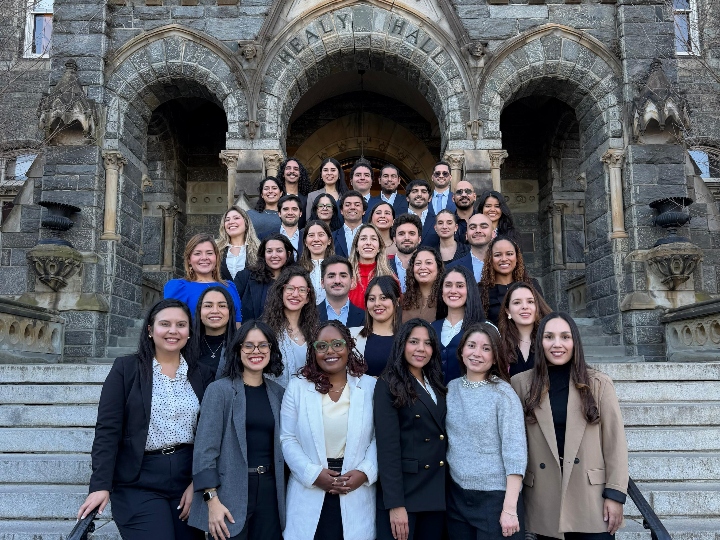
By Guadalupe Ramírez and Cristina Ruiz (EML’21)
GCL 2026 participants learned from distinguished professors and collaborators from Georgetown University’s MSB (Ricardo Ernst, Academic Director of LALP; Jeff Reid; Evelyn Williams; Kerrie Carfagno; José Guerrero; Ella Washington; Sam Potolicchio; Bob Bies; Douglas McCabe; Jeanine Turner; Shye Gilad; Leslie Crutchfield; Alberto Rossi), GAI (Denisse Yanovich and Juan Gonzalez), SCS (John Trybus and Carol Blymire), CAS (Ángel Gil-Ordóñez), CLAS (Michael Shifter, Antonio Ortiz-Mena, Hector Schamis, and Lutiana Valadares), and MSB Pivot Program (Alyssa Lovegrove & LaTasha Moore).
Between sessions, they had the opportunity to interact with presidents, vice presidents, and members of Latino student associations such as LASA, LABA, LAPA, and GUGAMS at Georgetown, exchanging perspectives on leading the initiatives they drive. They also met with a variety of external experts, including Diane Garza (iCatalyze), Ricardo Terán (Agora Partnerships), Lizze Lee and Alejandra Moreno (Aponwao Ideas), Jennifer O’Donoghue (Brookings), Betilde Muñoz-Pogossian (OAS), Juan Luis Manfredi (University of Castilla-La Mancha), Yanire Braña (MET Community), Masato Okumura and Cesar Buenadicha (IDB), and Pilar Frank O’Leary (Aspen Conexión).
During the program, the strength of the alumni network became evident, consolidating further each year. This was demonstrated through mentorship sessions led by 29 alumni, who were highly committed to the success of the participants and the development of their proposals.
"It has been truly inspiring to work alongside our GCLs across nine cohorts so far, and GCL 2026 has been no exception. They are a truly incredible group of young leaders, committed and ready to drive positive transformation in the region. It’s been equally rewarding to continue to create opportunities for our alumni to reconnect and share their experiences. This year was especially remarkable, with 29 alumni mentors supporting 35 participants across 12 countries. This is a powerful reflection of what it means to be a LALP alum and a testament to the strength and engagement of our alumni community." - Cristina Ruiz, LALP Senior Associate Director
Added to this was the motivating connection fostered by Elizabeth Arredón (GCL 2013, Mexico), President of the GCL Alumni Network 2025–2027, as well as valuable interaction with Pedro Urruchurtu (GCL 2016, Venezuela), recognized with the GCL 2026 Impact Award for his leadership and courage in the service of freedom and democracy in Venezuela.
Turning Ideas into Real Change
GCL differentiates itself from other leadership programs by bringing together a diverse cohort from across Latin America and the Caribbean, interested in personal and professional growth while strengthening leadership skills and deepening regional understanding. During the program, participants apply what they’ve learned by creating or expanding an original social impact project, implemented in their home countries in the social, private, or public sectors.
The implementation of these projects reflects LALP’s approach to educating, connecting, and inspiring regional leaders, generating networks of impact that multiply positive effects throughout Latin America and the Caribbean, in line with the university’s mission of teaching and service for the common good. The program aims to develop leadership in action, providing tools to address regional challenges, fostering leaders capable of driving initiatives that enhance global competitiveness, social responsibility, cross-sector collaboration, and promoting personal growth through spaces for reflection and shared learning.
Through multidisciplinary courses on economics, society, and politics, participants gain a comprehensive view of the region’s challenges and identify opportunities to address them. At the same time, GCL strengthens an active network of ethical, committed leaders from different sectors, collaborating to generate positive impact in their countries and across Latin America through innovation and teamwork.
"Each of us is like a star, with a unique story that illuminates dreams and hope. United by the desire to create a better world, we transform our communities, drive innovation, and connect ideas with action. What began as a journey of discovery at Georgetown now becomes a return with new eyes, ready to face old challenges and build the realities we once dared to dream." – Luisa Souza, GCL 2026, Brazil
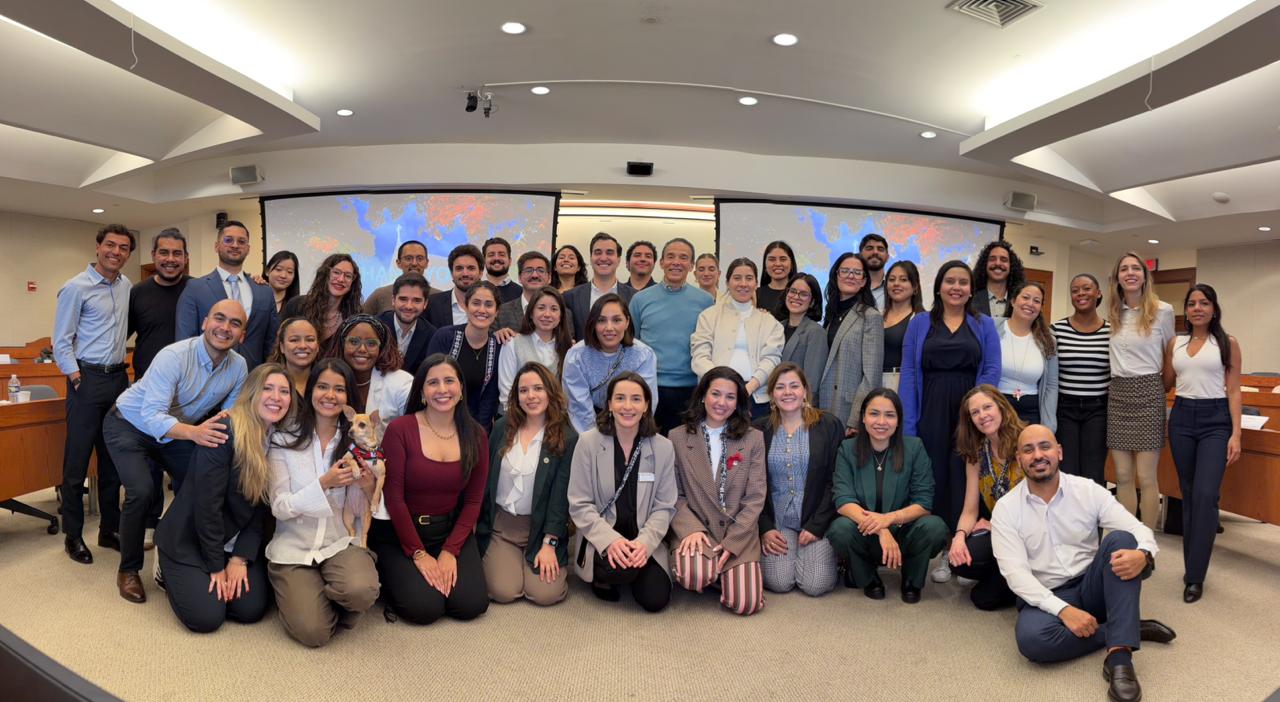
The program began with four weeks of virtual classes, followed by six weeks in-person at Georgetown University, which included workshops, interactive classes, and visits to organizations in Washington, D.C. The virtual sessions, held three times per week, covered topics such as globalization, competitiveness, governance, leadership, design thinking, communication, and systems thinking for project development.
The virtual phase allowed participants to advance their initiatives and strengthen their projects through strategic workshops and Business Model Canvas feedback.
"These weeks at Georgetown were transformative, not just for the knowledge we gained, but for the community we built. Strangers became colleagues, colleagues became collaborators, and collaborators became friends. Together we are a network of leaders ready to transform Latin America, guided by courage, talent, and the conviction that the world changes when many leaders act together." – Gerardo García, GCL 2026, Mexico
Upon arriving at Georgetown University, the 35 participants began the in-person phase with orientation and activities, accessing classes from experts in diverse topics such as business, innovation, government, artificial intelligence, and communication, designed to strengthen their leadership and capacity for impact. They also maximized the benefits of their strategic location in Washington, D.C., participating in visits coordinated with institutions such as Microsoft, Atlantic Council, Inter-American Development Bank, and Gallup.
On March 24, participants presented their final projects in a pitch format before a panel of experts from the Inter-American Development Bank, Halcyon Accelerator, and McDonough School of Business. The presentations demonstrated the cohort’s multiplier effect, showing how their tangible and scalable initiatives generate social impact in their communities, the region, and beyond, turning passions into concrete actions for a better world.
During the closing day on March 25, the five standout projects of the cohort were presented:
• Alejandro Zorrilla Elorza (Mexico) with Verbena – bringing technology and digital access to small producers and local businesses in Latin America, helping them thrive and participate fairly in the modern economy.
• María Gracia Agurto Osorio (Peru) with Golden Circle – a fundraising operating system equipping underrepresented founders and tech professionals in Latin America, as well as the accelerators, incubators, and universities supporting them, with tools, training, and networks to secure investment.
• María Victoria Pistilli Segovia (Paraguay) with Nicoletta – a B2B brand creating customized crochet products for universities, handmade in Paraguay by women in penitentiary centers, who are paid per piece and earn sentence reductions, transforming served time into regained time.
• Mayte Holguera Aguilar (Mexico) with Wela – building an entrepreneurship hub in Tampico, Tamaulipas, and the surrounding region to accelerate startups, connect talent with global opportunities, and transform the innovation ecosystem.
• Ximena López (Paraguay) with WeFund – a social finance platform in Paraguay connecting community initiatives with blended financing and providing comprehensive support to ensure lasting, measurable impact.
These projects highlight the creativity, leadership, and regional collaboration that the GCL program continues to promote each year.
"The GCL program not only develops leaders but also change agents: it transforms learning into action, multiplies its impact across the region, and creates a community that supports its participants beyond the classroom." – Charlotte Kennedy, LALP Program Manager
Finally, during the GCL cohort graduation ceremony, Luisa Souza (Brazil) and Gerardo García (Mexico) shared words on behalf of their peers, highlighting how the program transformed, inspired, and united them despite their different backgrounds
Professor Ricardo Ernst, accompanied by the LALP team, closed the ceremony, emphasizing the feasibility and scalability of the presented projects, encouraging participants to continue being agents of change in their communities, and reminding them of their responsibility to drive the transformations they consider necessary in their environments.
We wholeheartedly congratulate the GCL 2026 cohort. We are excited to see how their projects continue generating impact in the region and beyond, and we look forward to welcoming them again in November as part of the alumni network to celebrate 20 years of achievements of the LALP programs. We await you with great excitement!