


A Network in Motion: 33 Countries Designing the Future of Ibero-America
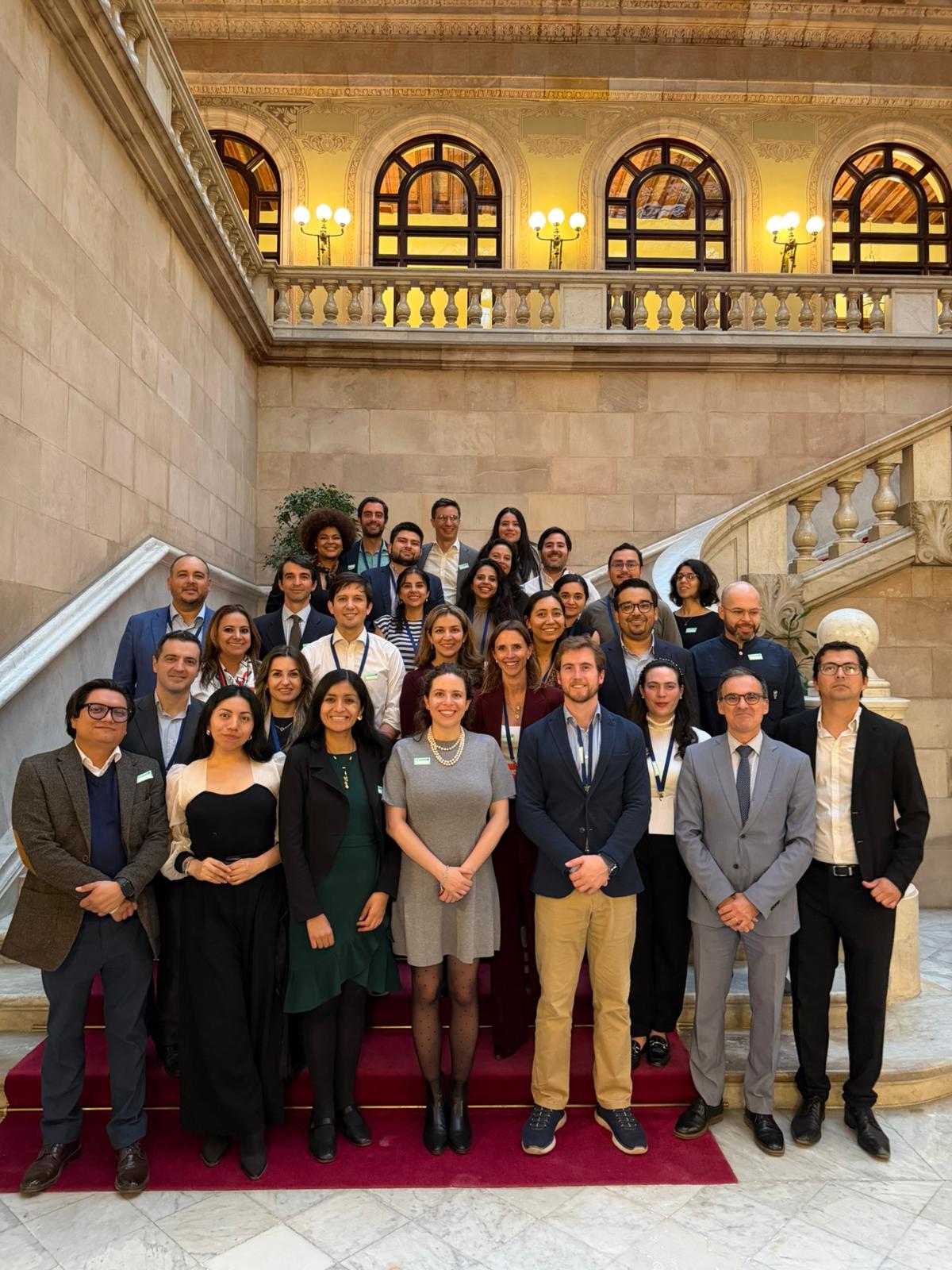
There are moments when a network stops being a list of names and becomes a space where things truly happen. The recent gathering of the GCL alumni in Barcelona was exactly that moment: the point at which an international group of leaders from 33 countries stopped talking about the future and began to design it.

By Maria Paula Garcia (GCL 2024, Colombia)
There are moments when a network stops being a list of names and becomes a space where things truly happen. The recent gathering of the GCL alumni in Barcelona was exactly that moment: the point at which an international group of leaders from 33 countries stopped talking about the future and began to design it.
Organized by the GCL Alumni Network, the meeting once again demonstrated why this program—created in 2007 by the Latin America Leadership Program (LALP) at Georgetown University’s McDonough School of Business (MSB)—continues to be a benchmark for regional leadership. It was an encounter defined by high-level analysis, institutional engagement, strategic debate, and a human dimension that few international networks manage to sustain with such authenticity.
An organization that reflects collective maturity
The coordination of the gathering was led by Javier Marcet, Elizabeth Arredón, Isaac López, Lula Capriel, Estefanía Orellana, Magda Comas, Stephany Contreras, Bernardo Vázquez, Pelayo Maestre, Ángela Ospina, Marinelly Díaz, and Ol Beun—an organizing team that blended operational expertise, strategic vision, and a deep commitment to the network’s mission.
The support of sponsors such as Universitat Abat Oliba CEU, Rafik, Marcet Football School, and Fuster Fabra Abogados, together with partners including Estudio 89, The Georgetown Club of Spain, Círculo Ecuestre, and the Spanish Public Policy Network, made it possible to create a meeting that not only brought together diverse voices, but also connected them with Catalan institutions and key spaces for public reflection.
An opening that put the region into perspective
The opening of the event was not a ceremonial welcome; it was a reminder that Ibero-America faces complex challenges, but also an unprecedented opportunity: to harness its diversity in order to build collective solutions.
From the initial messages, a central idea emerged clearly: the region needs networks capable of connecting sectors, countries, and disciplines in order to accelerate high-impact decision-making. This was not merely about sharing projects, but about exploring what happens when leaders with different trajectories sit down to analyze the same problem.
Three conversations that set the regional tone
What truly defined the meeting was the quality of its panels: expert discussions with an executive mindset and evidence-based diagnoses.
1. Green investment from potential to deployment
Moderator: Ángela Ospina (international cooperation expert)
Panelists:
- Natalia Bayona (CEO, World Tourism Organization – UNWTO)
- Emilio Calvo Roldán (Director General, Institut Català d’Energia)
- Nuria Vilanova Giralt (Founder and President, ATREVIA)
- Juan Carlos Garavito Escobar (CEO, iNNpulsa Colombia)
The discussion revolved around a shared conclusion: Ibero-America has everything it needs to lead the green transition, but it will only do so if public vision, business commitment, and financial mechanisms that distribute risk come together. Regulation, competitiveness, investment, and narrative were all addressed. The takeaway was clear: the opportunity exists—what is missing is decisive action.
2. Economy and politics: stability in an unstable world
Moderator: Pelayo Maestre Armada (strategy and public affairs)
Panelists:
- Anna Ayuso (Latin America Senior Researcher, CIDOB)
- Juan Luis Manfredi (Professor at the University of Castilla-La-Mancha and Prince of Asturias Professor at Georgetown University)
This panel put an uncomfortable truth on the table: without political stability, investment fades; without investment, productivity cannot take off. Global risks, economic outlooks, and potential bridges with Europe were discussed. The final message was unequivocal: the region needs strong institutions, evidence-based policies, and a narrative capable of inspiring confidence.
3. Technology: innovation that does not lose its ethical compass
Moderator: Elizabeth Arredon Mier (GCL President 2025)
Panelists:
- Alexis Roig (CEO, SciTech DiploHub - Barcelona)
- Mara Balestrini (expert in digital civic innovation)
- José María Lassalle (Director, Forum for Technological Humanism, ESADE)
This conversation addressed one of today’s defining dilemmas: how to innovate without sacrificing rights. Artificial intelligence, data governance, and regional talent were at the center of the debate. The key insight was that Ibero-America can compete globally if it commits to robust ethical standards and innovation ecosystems that include both citizens and companies.
Institutional relationships that expand the network
Beyond the panels, the meeting underscored the value of engagement with public institutions and strategic spaces.
Visit to the Parliament of Catalonia
The delegation was received at the Parliament, where discussions focused on governance models, citizen participation, and decision-making processes—connecting GCL’s vision with Catalonia’s public management experience.
Institutional tour of Barcelona
Through a guided visit to emblematic sites, participants engaged with the history, innovation, and civic culture of a city that has become a European reference point.
Reception at the Círculo Ecuestre
A setting for dialogue with local business leaders and institutional representatives, where key conversations emerged around future alliances and opportunities for transnational collaboration. From analysis to action: leadership in real time
The leadership session led by Magda Comas—executive coach and President of ATA Baleares—and the intervention by Conor Neill, President of Vistage Spain and Research Collaborator at IESE Business School, offered moments of strategic introspection. They reminded participants that leadership is exercised through the conversations we build, the way we articulate purpose, and our ability to mobilize others toward a shared goal.
Commitments: when the network moves
The true value of the meeting lay not only in the ideas discussed, but in the
decisions that followed. Key agreements included:
· The creation of three working groups: green investment, technology, and governance
· The design of regional pilot projects
· A mentorship program connecting different generations of alumni
· Preparation of future editions with a vision of continuity and scalability
A network that accelerates
Barcelona left a powerful impression: when a network becomes a movement, borders cease to be limits and become bridges. That is what happened when 33 countries came together to imagine the future. Ideas that once circulated in isolation found common ground. Dispersed conversations aligned around collective purpose.
What remained was not an event, but momentum—an energy that, once ignited, does not stop.