How do governments decide which technologies power their national networks? In an era where digital infrastructure shapes economic growth, security, and global influence, technology decisions have become increasingly geopolitical.
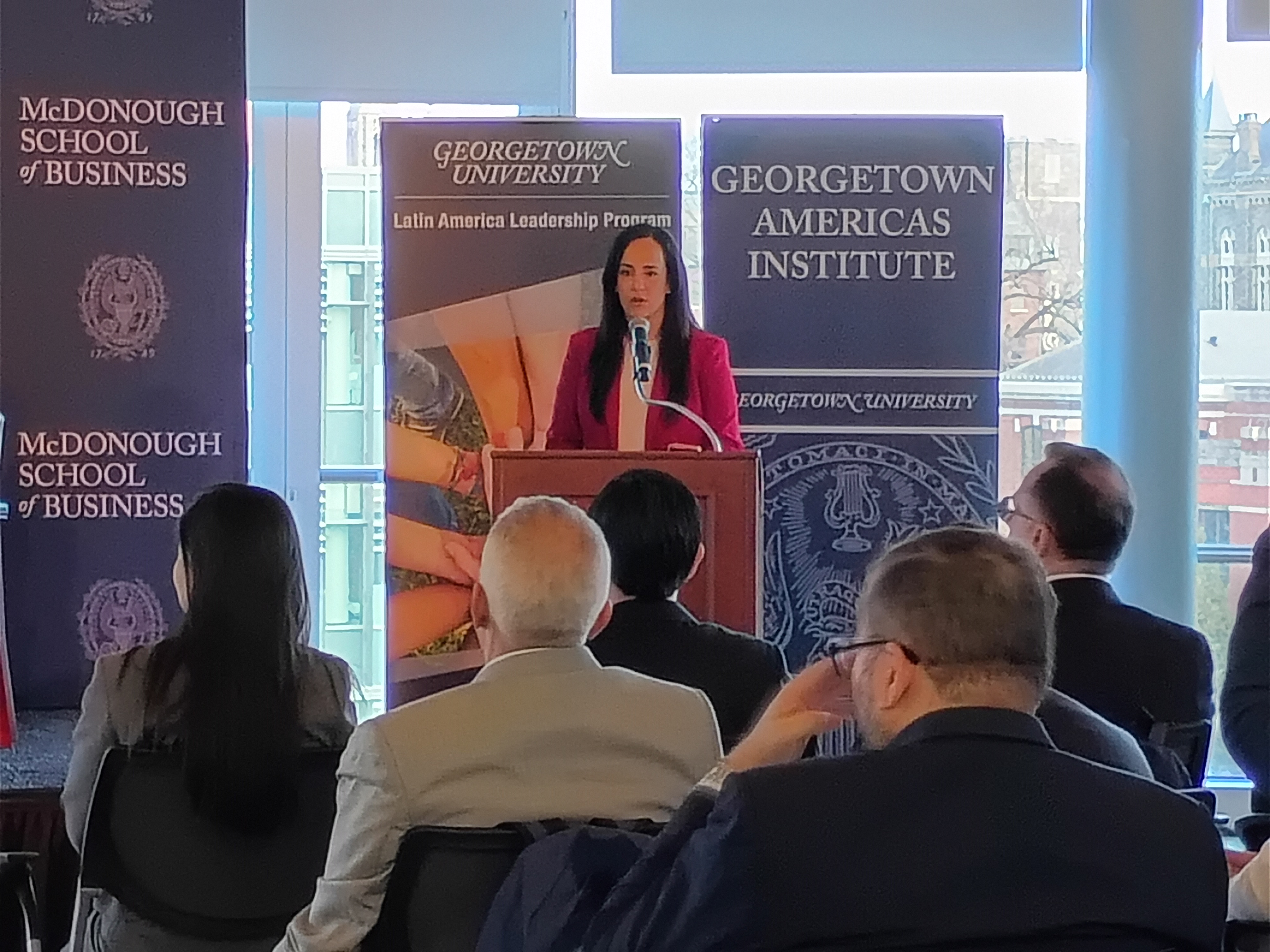
The Latin America Leadership Program (LALP) at Georgetown University, the Georgetown Americas Institute, and the Instituto Dominicano de las Telecomunicaciones (INDOTEL) hosted a timely conversation exploring how countries evaluate strategic technology choices—from telecommunications infrastructure to emerging AI systems—and the policy, security, and economic considerations behind these decisions.
This event was organized within the Advanced Program in Telecommunications Security and Public Sector Leadership, a custom program developed by the Latin America Leadership Program (LALP) for INDOTEL and held at Georgetown University on March 11–13, 2026. The workshop brought together public sector leaders to strengthen capacity in telecommunications security and digital governance, addressing cybersecurity risks, critical infrastructure protection, trusted vendor selection, 5G deployment, and the security implications of emerging technologies such as artificial intelligence and quantum computing.
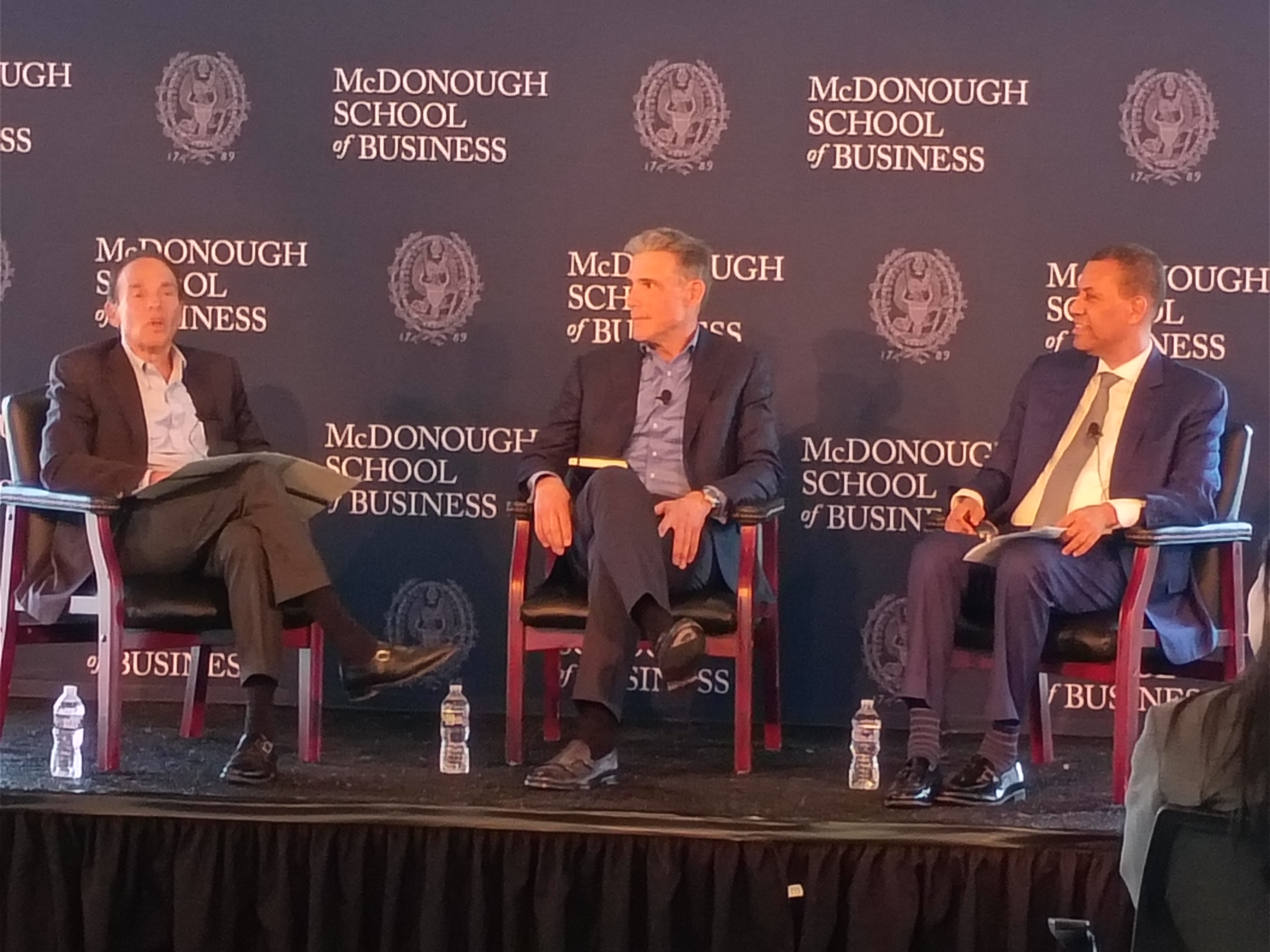
The panel featured Guido Gómez Mazara, President of INDOTEL, and Michael Armao, Founder & CEO of Verstand AI, moderated by Ricardo Ernst, Executive Director of LALP.
The discussion brought together leaders from academia, government, and industry to examine how nations navigate competing global technologies while safeguarding innovation, sovereignty, and connectivity.
Key Discussion Insights
- In today’s world, technology choices are no longer purely technical—they are deeply geopolitical.
- The digital infrastructure countries invest in will shape their economic growth, security, and global influence for years to come.
- Latin America and the Caribbean were highlighted as having a real opportunity to technologically leapfrog with the right strategic decisions.
- To make this possible, leaders must:
- Think beyond institutional and sector silos.
- Prioritize risk, policy, and performance simultaneously.
- Embrace a systems perspective across disciplines when evaluating emerging technologies.
Overall, the event underscored the importance of strategic leadership and cross-sector collaboration in making technology decisions that strengthen digital sovereignty and regional competitiveness.
Moderator
Ricardo Ernst
Executive Director of the Latin America Leadership Program, Baratta Chair in Global Business, Professor of Operations and Global Logistics, and the former Deputy Dean of the McDonough School of Business at Georgetown University. Ricardo Ernst is an expert in global supply chains, technology strategy, and economic development in emerging markets. He has advised governments and multinational firms across Latin America on strategic competitiveness, supply chains and operations, and digital transformation.
Panelists
Guido Gómez Mazara
President of Instituto Dominicano de las Telecomunicaciones (INDOTEL), the Dominican Republic’s telecommunications regulator. Dr. Gómez Mazara brings extensive experience in public policy and telecommunications governance, leading national efforts to expand connectivity, strengthen digital infrastructure, and modernize regulatory frameworks.
Michael Armao
Michael Armao is the founder and CEO of Verstand AI and brings over 20 years of IT and data architecture experience to the firm. Having spent over a decade working in Homeland Security and the Intelligence Community, Michael now dedicates himself to building and executing the commercial decision science and product engineering vision of the company.